
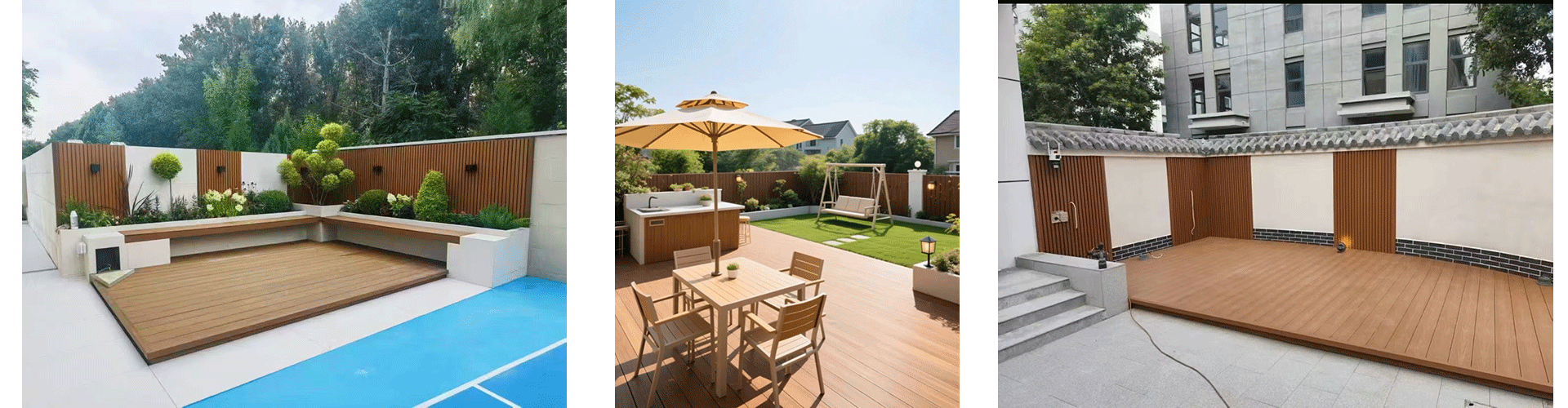
WPC (Wood Plastic Composite) flooring has significant advantages in terms of environmental friendliness, but there are also details that require attention. A comprehensive analysis can be conducted from the perspectives of raw materials, production process, usage stage, and recycling:
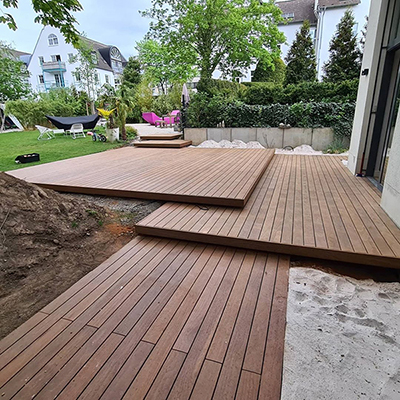
I. Core Environmental Advantages
-
Sustainability of Raw Materials
The main raw materials of WPC flooring are recycled plastics (such as polyethylene, polypropylene) and wood processing waste (such as wood flour, sawdust). It does not require the felling of natural wood and reduces the landfilling or incineration of plastic waste. This “turning waste into treasure” raw material model directly reduces dependence on forest resources and white pollution, conforming to the concept of circular economy. -
Low Release of Harmful Substances
High-quality WPC flooring does not use harmful adhesives such as formaldehyde and benzene in production. Instead, it combines wood flour and plastic through high-temperature melting and extrusion molding processes. Its formaldehyde emission is far lower than the national standard (usually ≤0.1mg/m³, even reaching the formaldehyde-free level), and it does not contain heavy metals or volatile organic compounds (VOCs). During use, it will not pollute indoor air, making it particularly suitable for sensitive places such as children’s activity areas and hospitals. -
Reduction of Pollution in Maintenance Links
Compared with traditional solid wood flooring, which requires regular waxing and painting (which may contain benzene-based solvents), WPC flooring only needs clean water or neutral detergents for daily cleaning, without additional chemical treatments. In the long run, it further reduces the risk of chemical pollution.
II. Environmental Details to Note
-
Hidden Dangers of Inferior Products
Some low-cost WPC flooring may use untreated recycled plastics (such as industrial waste containing heavy metals) or inferior wood flour. Harmful stabilizers (such as lead salts) may be added during the production process, leading to problems such as peculiar smell and excessive heavy metals in the products. Therefore, it is crucial to choose products that have passed authoritative environmental certifications (such as EU CE, US FSC, and China Environmental Labeling Certification). -
Limitations of Recycling
WPC flooring is composed of a composite of plastic and wood fibers. The two materials have significant differences in properties, making secondary recycling and separation difficult. Currently, the industry mainly focuses on “downcycling” (such as crushing for low-performance products like roadbeds and fences), and complete recycling technology is still under development.
III. Comprehensive Conclusion
High-quality WPC wood-plastic flooring is an environmentally friendly material: Its raw material utilization method reduces resource consumption and pollution, and no harmful substances are released during use, which is in line with the needs of modern green buildings and sustainable development. However, it is necessary to be alert to the environmental risks of inferior products, and it is recommended to choose products with environmental certifications through formal channels.
From a full-life-cycle perspective, the environmental friendliness of WPC flooring is better than that of traditional flooring that relies on natural wood, and also better than some pure plastic flooring that is difficult to degrade. It is an ideal choice that combines practicality and environmental protection.