
Description
Argument
Products Description
Application Scenarios of MBBR Systems
Moving Bed Biofilm Reactor (MBBR) systems have gained widespread recognition in the field of water treatment due to their exceptional adaptability, stable treatment efficiency, and compatibility with diverse water quality conditions. Their application scope extends far beyond basic wastewater purification, covering multiple scenarios that address both conventional treatment needs and emerging challenges in water resource management.
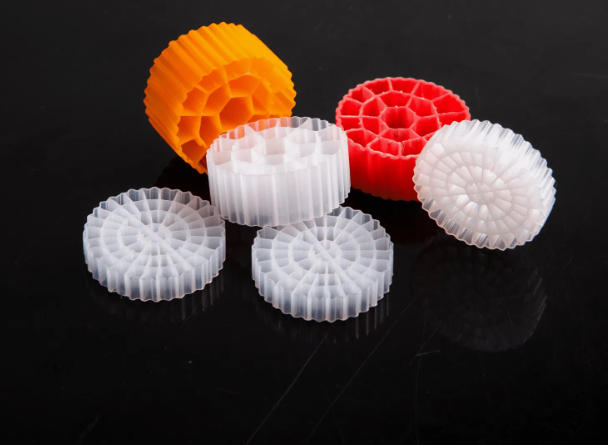
In wastewater treatment, MBBR systems demonstrate strong versatility across different water sources. For municipal wastewater, they play a critical role in handling the complex mixture of domestic sewage, kitchen waste water, and minor industrial inflows typically found in urban sewage networks. By efficiently degrading organic matter (reducing BOD and COD) and facilitating nitrification/denitrification, MBBR systems ensure that treated water meets municipal discharge standards, while their compact design makes them suitable for urban areas where land resources are scarce. In residential communities, especially high-density residential complexes, MBBR-based decentralized treatment units offer a practical solution—they can be installed in limited spaces (such as basement utility areas or small on-site treatment yards) to process domestic wastewater locally, reducing the burden on municipal sewage pipelines and lowering transportation costs.
The industrial sector benefits significantly from MBBR’s ability to tackle industry-specific wastewater challenges. For food and beverage processing plants, which generate wastewater rich in sugars, starches, and organic residues (e.g., from fruit juice production, dairy processing, or brewery operations), MBBR systems efficiently break down these high-concentration organic pollutants, ensuring compliance with strict industrial discharge regulations. In oil and gas facilities, including refineries, drilling sites, and petrochemical plants, MBBRs are used to treat wastewater contaminated with hydrocarbons, oils, and greases; their biofilm carriers provide a protected environment for specialized microorganisms that can degrade these recalcitrant compounds, minimizing environmental risks from oil-laden wastewater discharge. For chemical plants, which produce wastewater containing toxic or refractory organic substances (such as solvents, dyes, or synthetic chemicals), MBBR systems are often integrated into multi-stage treatment processes—their high biomass concentration and microbial diversity enhance the degradation of complex pollutants, making them a reliable component in chemical wastewater treatment.
Beyond traditional wastewater treatment, MBBR systems are increasingly pivotal in water reuse and recycling initiatives, a key strategy for addressing global water scarcity. In industrial water recycling, for example, MBBRs treat post-production wastewater (e.g., from manufacturing, cooling systems, or washing processes) to remove organic contaminants and nutrients, transforming it into reusable water for non-potable purposes such as equipment cleaning, irrigation, or cooling tower makeup. This not only reduces industrial reliance on freshwater resources but also cuts down on wastewater discharge volumes. In municipal water reuse programs, MBBR systems serve as a core biological treatment step in advanced water purification processes—after treating secondary effluent, the water is further polished (e.g., via filtration or disinfection) to meet standards for applications like urban greening, road washing, or even indirect potable reuse (IPR) in regions with severe water shortages. Additionally, in residential or commercial water recycling systems (e.g., in eco-friendly buildings or gated communities), compact MBBR units treat greywater (from sinks, showers, or laundry) for on-site reuse, reducing household freshwater consumption by 30-50% in some cases.
To meet increasingly stringent water quality standards or address complex contamination scenarios, MBBR systems are frequently combined with other treatment technologies to form synergistic, multi-stage processes. When paired with sand filtration, for instance, MBBRs first degrade organic matter and nutrients, and the subsequent sand filtration step removes residual suspended solids, colloidal particles, and loose biofilm fragments—this combination is widely used in municipal wastewater treatment plants to produce clear, high-quality effluent. In combination with membrane filtration technologies (such as ultrafiltration (UF), nanofiltration (NF), or reverse osmosis (RO)), MBBRs act as a critical pre-treatment unit: by reducing the organic and suspended solid load in wastewater, they significantly mitigate membrane fouling—a major challenge in membrane systems—extending membrane lifespan and lowering operational costs. This MBBR-membrane hybrid system is commonly employed in advanced water reuse projects, where ultra-pure water is required (e.g., for semiconductor manufacturing or potable reuse). MBBRs are also often integrated with ultraviolet (UV) disinfection; after the MBBR process removes organic pollutants and nutrients, UV disinfection inactivates harmful microorganisms (such as bacteria, viruses, and protozoa) without adding chemical disinfectants (e.g., chlorine), making the treated water safer for reuse or discharge into sensitive ecosystems (such as lakes, rivers, or coastal waters).
In summary, MBBR systems’ flexibility, efficiency, and compatibility make them a versatile solution across a broad spectrum of water treatment needs—from municipal and industrial wastewater purification to water reuse and recycling. As global water challenges evolve, their role in sustainable water management is only set to grow, supporting efforts to protect water resources and ensure water security for communities and industries worldwide.
Tags:
Technical parameter
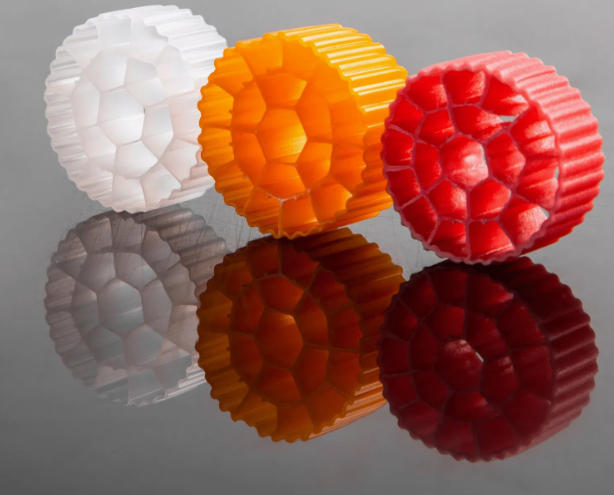
mbbr filter media
mbbr filter media
Detailed Introduction to MBBR Filter Media
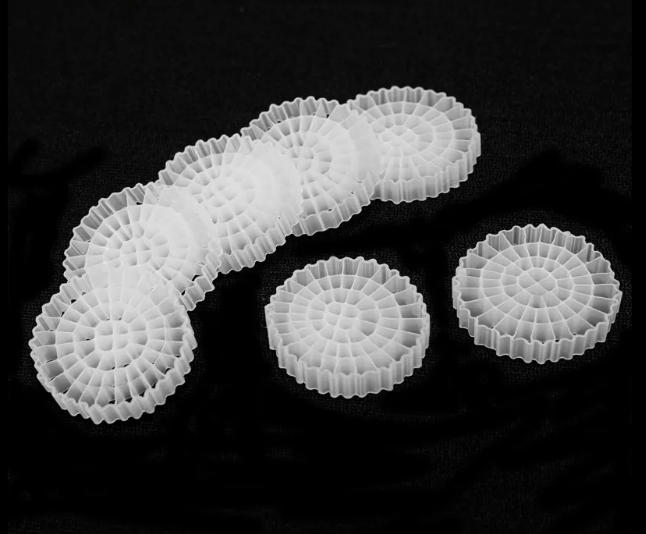
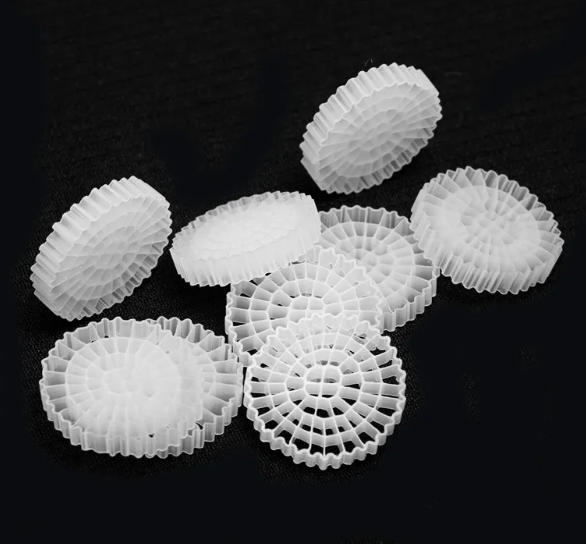
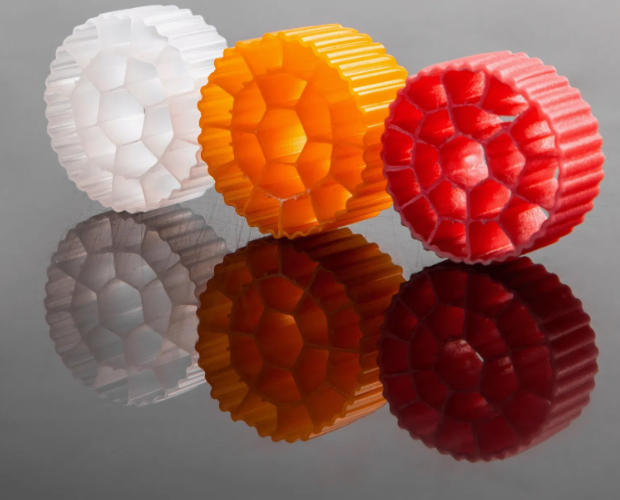
MBBR filter media (also known as biofilm carriers) are the core functional components of Moving Bed Biofilm Reactors (MBBR). Their material properties, structural design, and performance parameters directly determine the biofilm attachment efficiency, microbial community diversity, and overall treatment effectiveness of the system. Serving as the “habitat” for microorganisms, MBBR filter media must simultaneously meet three core requirements: “easy microbial attachment, high mass transfer efficiency, and strong physical stability,” making them the key carriers for efficient sewage purification.
I. Core Definition and Functional Positioning
MBBR filter media are porous/structured carriers that can float freely (or semi-freely) in water. By providing a large specific surface area, they offer attachment and growth spaces for functional microorganisms such as heterotrophic bacteria, autotrophic bacteria, nitrifying bacteria, and denitrifying bacteria. Their core functions include:
- Microbial Immobilization: Through designs such as surface roughness and pore structure, they promote rapid microbial attachment and the formation of stable biofilms (typically 50-300 μm in thickness), preventing microorganisms from being lost with water flow;
- Mass Transfer Optimization: The flow characteristics and porous structure of the carriers enhance the contact efficiency between organic matter, dissolved oxygen (DO) in sewage, and the biofilm, providing sufficient substrates for microbial metabolism;
- Environmental Buffering: The microenvironment inside the carriers can buffer fluctuations in external water quality (e.g., pH, toxic substances) and loads, protecting the activity of sensitive microorganisms (such as nitrifying bacteria) and improving the system’s shock resistance;
- Biomass Regulation: Driven by aeration or agitation, the mechanical collision of carriers enables the natural sloughing of aged biofilms, maintaining a balance between biofilm “growth and renewal” and avoiding excessive thickening that hinders mass transfer.
II. Key Material Properties
The material selection of MBBR filter media must balance chemical stability, physical strength, biocompatibility, and density adaptability. Currently, the mainstream materials are high-molecular polymers, with specific properties as follows:
| Material Type | Representative Materials | Core Properties | Applicable Scenarios |
|---|---|---|---|
| Polyethylene (PE) | High-Density Polyethylene (HDPE) | 1. Strong chemical stability: Resistant to acid, alkali, and corrosion from organic matter/salts in sewage, with no leachables during long-term use;
2. High physical strength: Impact-resistant, wear-resistant, and non-friable; 3. Controllable density: Density can be adjusted to 0.93-0.98 g/cm³ (slightly less than water) via modification to ensure floatability; 4. Easy surface modification: Surface roughness can be enhanced to improve microbial attachment. |
Municipal sewage, industrial organic wastewater (e.g., food, papermaking) |
| Polypropylene (PP) | Homopolypropylene, Copolypropylene | 1. Excellent temperature resistance: Can withstand high temperatures of 60-80℃, suitable for high-temperature wastewater;
2. Strong aging resistance: UV-resistant, oxidation-resistant, with a service life of 10-15 years; 3. Slightly lower density than PE (approximately 0.90-0.91 g/cm³), offering better floatability. |
High-temperature industrial wastewater (e.g., printing and dyeing, chemical industry), high-salt wastewater |
| Other Modified Materials | PE/PP Composite Modified Materials | 1. Enhanced functionality: Antibacterial agents, hydrophilic agents, or bioaffinity components are added to improve the microbial attachment rate and activity;
2. Adaptability to special environments: UV-resistant modified materials for open-air tanks, low-temperature-resistant modified materials for cold regions. |
Special working conditions (e.g., low temperature, high salt, open-air systems) |
Note: Recycled plastics or low-purity polymers are strictly prohibited for manufacturing filter media to avoid the leaching of harmful substances that may pollute water bodies or affect microbial activity.
III. Mainstream Structural Designs and Classifications
The structural design of MBBR filter media directly affects the specific surface area, mass transfer efficiency, and floating performance. Currently, mainstream structures on the market can be divided into two categories: porous type and structured type, with specific design features and differences as follows:
1. Porous Filter Media
- Structural Features: Granular or cylindrical in overall shape, with micron to millimeter-sized pores (e.g., honeycomb pores, sponge pores) distributed inside and on the surface; the porosity is usually 80%-95%;
- Typical Morphology: Porous cylinders, porous spheres (with diameters typically 10-25 mm);
- Core Advantages:
- Large specific surface area: The specific surface area per unit volume can reach 300-800 m²/m³, providing sufficient attachment points for microorganisms;
- Rich internal microenvironment: An “aerobic-anoxic” gradient is formed inside the pores (high DO outside, low DO inside), enabling simultaneous organic matter degradation and simultaneous nitrification-denitrification (SND) to improve total nitrogen removal efficiency;
- Applicable Scenarios: Systems requiring enhanced nitrogen removal (e.g., total nitrogen treatment in municipal sewage, high-ammonia-nitrogen industrial wastewater).
2. Structured Filter Media
- Structural Features: Adopt modular design, such as corrugated plates, multi-tooth rings, and grid-like structures; the surface is textured with concave-convex patterns to increase roughness, without dense internal pores;
- Typical Morphology: Corrugated plates, rings (outer diameter 20-35 mm, height 10-20 mm), gear-like shapes;
- Core Advantages:
- Low mass transfer resistance: The smooth surface has no clogging risk, allowing more direct contact between sewage and biofilm, suitable for wastewater with high suspended solids (SS) or high viscosity;
- Excellent flow performance: The structural design conforms to fluid mechanics, enabling uniform mixing with aeration or agitation to avoid local accumulation;
- Easy cleaning: Aged biofilms can be easily sloughed off through mechanical collision, no additional backwashing required;
- Applicable Scenarios: Wastewater with high SS (e.g., steel wastewater, food processing wastewater), working conditions prone to clogging.
IV. Key Performance Parameters (Core Indicators for Selection)
When selecting MBBR filter media, the following performance parameters should be focused on to ensure compatibility with treatment requirements and reactor design:
| Parameter Name | Definition and Significance | Routine Range | Impact on Selection |
|---|---|---|---|
| Specific Surface Area (SSA) | Total surface area provided by unit volume of filter media (m²/m³), directly determining the amount of microbial attachment | 300-1200 m²/m³ | High-load wastewater (e.g., chemical, food industry) requires high SSA (800-1200 m²/m³), while low-load wastewater can choose 500-800 m²/m³ |
| Porosity | The ratio of pore volume inside the filter media to the total volume of the filter media (%), affecting mass transfer efficiency and microbial habitat space | 70%-95% | Nitrogen removal systems require high porosity (85%-95%) to form anoxic microenvironments; wastewater with high SS can choose 70%-80% to avoid clogging |
| Bulk Density | Mass of filter media per unit volume (kg/m³), determining the floating performance of the filter media (must be slightly less than the density of water, 1000 kg/m³) | 30-80 kg/m³ | Systems with low aeration intensity require low bulk density (30-50 kg/m³), while systems with high agitation intensity can choose 50-80 kg/m³ |
| Temperature Resistance Range | Temperature range within which the filter media maintains physical stability (℃) | -10℃-80℃ (for PE/PP) | Low-temperature regions (e.g., northern winter) require low-temperature-resistant materials (above -20℃), while high-temperature wastewater requires materials with temperature resistance above 60℃ |
| Service Life | Duration during which the filter media maintains stable performance under normal working conditions (years) | 10-15 years (for high-quality PE/PP) | Industrial wastewater systems should prioritize filter media with long service life to reduce replacement costs; municipal sewage systems can be selected based on a 10-year service life |
| Filling Ratio | The ratio of filter media volume to the effective volume of the reactor (%), affecting biomass and water flow state | 30%-70% | New systems are usually filled with 30%-50%; the ratio can be increased to 50%-70% when the load is elevated; excessive filling (>70%) may lead to uneven mixing |
V. Key Points for Installation and Operation Management
1. Installation Precautions
- Filling Method: The filter media should be evenly added to the reactor to avoid local accumulation (achievable via zoned feeding or flow guiding devices);
- Screen Matching: The water outlet of the reactor must be equipped with a screen with a pore size smaller than the minimum size of the filter media (e.g., 5-10 mm grid) to prevent filter media loss;
- Pretreatment Requirements: New filter media should be rinsed with clean water before use to remove residual dust or impurities from production and avoid initial sewage contamination.
2. Operation and Maintenance Key Points
- Biofilm Cultivation: In the initial start-up phase, a “low-load water inflow + gradual increase” approach should be adopted to promote microbial attachment (a stable biofilm is usually formed within 1-2 weeks);
- Aged Biofilm Control: By adjusting aeration intensity (for aerobic systems) or agitation speed (for anoxic systems), the collision between filter media is used to realize the natural sloughing of aged biofilms, preventing excessive biofilm thickness (>300 μm) that hinders mass transfer;
- Regular Inspection: Check the status of the filter media every 3-6 months. If damage, deformation, or aging (e.g., brittle surface) occurs, supplement or replace the media in a timely manner (the single replacement amount should not exceed 20% of the total filter media to avoid affecting system stability);
- Cleaning Requirements: If a large amount of inorganic scale (e.g., in high-hardness wastewater) adheres to the surface of the filter media, regular soaking and cleaning with dilute acid (e.g., 5% hydrochloric acid) can be performed to restore surface roughness.
VI. Differences from Traditional Filter Media (e.g., Activated Sludge, Fixed Packing)
As “mobile carriers,” MBBR filter media have significant advantages compared to “activated sludge” (suspended microorganisms) and “fixed packing” (e.g., elastic packing, combined packing) in traditional biological treatment:
| Comparison Dimension | MBBR Filter Media | Activated Sludge | Fixed Packing |
|---|---|---|---|
| Microbial Retention Rate | High (biofilm fixed on carriers, low loss) | Low (suspended microorganisms easily lost with effluent) | Relatively high (fixed on packing, but prone to sloughing) |
| Shock Resistance | Strong (carriers buffer the microenvironment to protect microorganisms) | Weak (load fluctuations easily cause sludge bulking) | Moderate (fixed microorganisms, but limited mass transfer) |
| Footprint | Small (large specific surface area, compact design) | Large (requires sedimentation tanks and recirculation systems) | Medium (packing occupies space, requiring maintenance channels) |
| Clogging Risk | Low (high mobility, no easy accumulation) | None (suspended state) | High (fixed packing prone to excessive biofilm thickness and clogging) |
| Operation Complexity | Low (no sludge recirculation or backwashing required) | High (needs to control MLSS and recirculation ratio) | Medium (requires regular cleaning and packing replacement) |
VII. Conclusion
MBBR filter media are the “core engine” of MBBR technology. The rational selection of their materials, structures, and performance parameters directly determines the treatment efficiency, stability, and operation costs of the reactor. In practical applications, comprehensive selection should be based on wastewater type (e.g., municipal/industrial, high-load/low-load), treatment objectives (e.g., BOD removal/nitrogen removal), and working conditions (e.g., temperature, aeration intensity). Meanwhile, scientific installation and operation management are essential to give full play to the advantages of MBBR technology—”high efficiency, compactness, and shock resistance”—and achieve stable compliance treatment of sewage.