
Introduction to Moving Bed Biofilm Reactor (MBBR) Technology
The Moving Bed Biofilm Reactor (MBBR) is an improved version of fixed-film bioreactors, such as Surface Area Fixed Filmed Technology (SAFF) and Rotating Biological Contactor (RBC). Its core difference lies in that the carrier media of MBBR can float freely in sewage/effluent. This technology realizes sewage purification by introducing thousands of polyethylene biofilm carriers into an aerated wastewater treatment basin and utilizing the mixed movement of the carriers.
I. Core Structure and Working Principle of MBBR
(I) Core Structure
A typical MBBR reactor consists of the following key components:
- Reactor Tank: Serves as the core space for the interaction between carriers and microorganisms, where a specific reaction environment needs to be maintained.
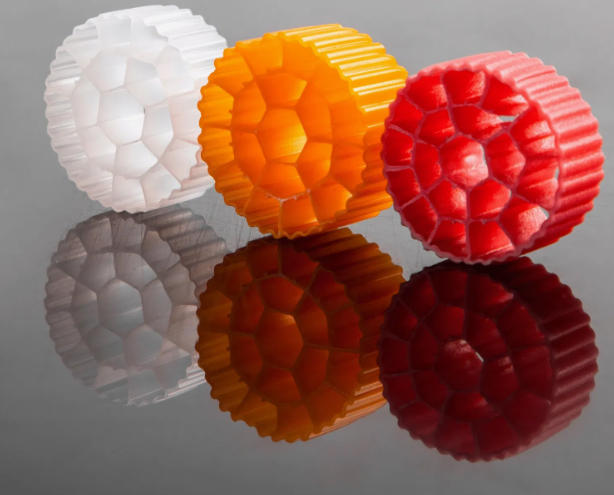
- Biofilm Carriers: Usually made of materials such as high-density polyethylene (HDPE), polyethylene, or polypropylene, with a specific gravity of less than 1.0, allowing them to remain submerged and floating in water. The carriers have a large specific surface area, providing sufficient attachment space for microbial growth.
- Aeration and Agitation System:
- In aerobic reaction scenarios, medium or coarse bubble diffusers are evenly arranged at the bottom of the tank. The dissolved oxygen (DO) concentration needs to be maintained above 2.5-3 mg/L to meet the requirements of biochemical oxygen demand (BOD) removal; for nitrification, a higher DO concentration must be maintained.
- In anoxic reaction scenarios (for denitrification), no aeration devices are installed. Submersible mixers are used to keep the carriers suspended in the tank, ensuring full contact between microorganisms and wastewater.
- Carrier Retention and Solid-Liquid Separation System: Screens are installed on the downstream side walls of the reactor tank to prevent carriers from being lost with the water flow; a clarifier or dissolved air flotation (DAF) unit is required downstream of the screens to separate biomass and solid particles from wastewater. Notably, no sludge recirculation is needed throughout the process.
(II) Working Mechanism
- Biofilm Formation and Function: Microorganisms attach to the surface of the carriers and grow to form a thin biofilm, typically with a thickness ranging from 50 to 300 microns. The protected space inside the carriers can support the growth of both heterotrophic and autotrophic bacteria. The high-density microbial population is the core factor enabling efficient biodegradation in the system, while also ensuring process stability and easy operation.
- Pollutant Degradation Pathway: After wastewater enters the MBBR reactor tank, the biofilm on the carrier surface degrades organic pollutants through biological metabolism:
- Organic carbon is converted into carbon dioxide, which escapes from the system along with aeration or airflow, achieving BOD removal.
- Ammonia nitrogen in organic matter is converted into nitrate through nitrification.
- If total nitrogen removal is required, nitrate can be further converted into nitrogen gas through denitrification in a subsequent anoxic MBBR tank.
II. Application Scope of MBBR
Currently, thousands of MBBR treatment systems have been built worldwide, with a wide range of applicable industries covering various fields that require wastewater treatment, including but not limited to:
- Food and beverage processing
- Iron and steel smelting
- Petroleum refining
- Petrochemical industry
- Chemical manufacturing
- Pulp and paper industry
This technology can specifically address wastewater treatment needs of different industries, including BOD removal, nitrification (ammonia nitrogen removal), and denitrification (total nitrogen removal).
III. Core Advantages of MBBR (Compared with Traditional Activated Sludge Process)
As one of the mainstream biological treatment technologies currently, MBBR has multi-dimensional advantages over the traditional Activated Sludge Process (the most widely used traditional technology) and Membrane Bioreactor (MBR) technology. Its core features are as follows:
| Advantage Category | Specific Performance |
|---|---|
| Strong Process Stability | Excellent resistance to load fluctuations, insensitive to short-term nutrient limitations, and capable of maintaining stable treatment effects for a long time. |
| High Treatment Efficiency | Low sludge production, no or minimal flocculant required for solid-liquid separation, reducing treatment costs and the risk of secondary pollution. |
| Small Footprint | It is a compact process, typically requiring only 1/3 of the space needed for the traditional Activated Sludge Process, significantly saving land resources. |
| Good Economy | Low initial investment cost, basically comparable to that of the traditional Activated Sludge Process, and significantly lower than that of MBR technology; no additional sludge recirculation equipment is needed during operation, further reducing energy consumption and operation and maintenance costs. |
| High Flexibility | Suitable for the upgrading and reconstruction of existing wastewater treatment plants without large-scale reconstruction; for new projects, if the treatment load needs to be increased in the future, it can be achieved through simple adjustments without high costs and complex construction. |
| Easy Operation and Maintenance | Equipped with automatic sludge wasting function, no sludge recirculation required, and no need to monitor mixed liquor suspended solids (MLSS) concentration; carriers are not prone to clogging, reducing troubleshooting and cleaning work. |
| Strong Expandability | The treatment capacity can be easily increased simply by increasing the filling ratio of biofilm carriers; it is a single-pass process, eliminating the need for a return activated sludge stream and simplifying the system structure. |
| Good Load Adaptability | The biofilm can automatically slough off and adjust according to the influent load, quickly responding to fluctuations in water quality and quantity, without manual intervention in food-to-microorganism (F/M) ratio or MLSS level. |
IV. Typical Application Scenarios of MBBR
MBBR technology can effectively address various common wastewater treatment needs, with core application scenarios including:
- BOD Reduction: Targeting degradable organic matter in domestic sewage or industrial wastewater, achieving efficient removal through biofilm metabolism to meet discharge standard requirements.
- Nitrification: Suitable for high-ammonia-nitrogen wastewater (such as chemical and food processing wastewater), converting ammonia nitrogen into nitrate through the nitrification of autotrophic bacteria, thereby reducing the risk of water eutrophication.
- Total Nitrogen Removal: Through a combined process of “aerobic nitrification + anoxic denitrification”, total nitrogen in wastewater is converted into nitrogen gas, meeting strict total nitrogen discharge limits.
V. Conclusion
The Moving Bed Biofilm Reactor (MBBR) system, with its flexible, economical, and easy-to-operate characteristics, can effectively meet the current wastewater treatment needs of different industries. Meanwhile, its compact design and expandable capacity enable it to adapt to future increases in treatment load or more stringent discharge requirements, providing a long-term and stable solution for various wastewater treatment projects.