
Multi-Dimensional Analysis of MBBR Filter Media
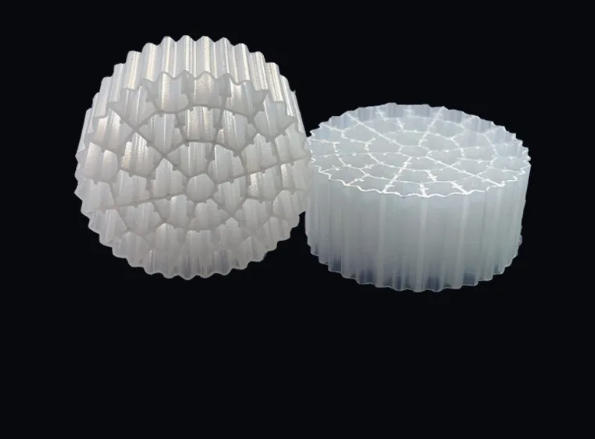
Moving Bed Biofilm Reactor (MBBR) filter media—often termed “biofilm carriers”—are far more than passive substrates in wastewater treatment; they are dynamic interfaces that integrate material science, microbial ecology, and process engineering to optimize pollutant removal. To fully grasp their role, it is critical to explore dimensions beyond basic structure and material: the microbe-carrier interaction, environmental adaptability, synergy with MBBR system design, emerging innovations, and operational challenges with mitigation strategies. Each of these aspects shapes how filter media perform in real-world scenarios, from municipal sewage plants to high-stress industrial settings.
1. Microbe-Carrier Interaction: The Foundation of Treatment Efficacy
The success of MBBR systems hinges on how well filter media support microbial colonization, biofilm development, and metabolic activity—an interplay governed by the carrier’s surface properties and microenvironment.
Surface Characteristics and Microbial Attachment
Microbial attachment to filter media is a two-step process: initial “reversible adsorption” (driven by van der Waals forces and electrostatic interactions) and subsequent “irreversible colonization” (aided by microbial extracellular polymeric substances, or EPS). Carrier surface roughness is a key driver here: rough surfaces (e.g., HDPE carriers with micro-grooves) create physical anchors for EPS, increasing attachment rates by 30–40% compared to smooth surfaces. For example, studies show that HDPE carriers treated with plasma etching (to enhance roughness) reduce the “biofilm start-up period” from 14 days to 7–9 days in municipal wastewater systems.
Surface hydrophilicity also plays a critical role. Native polyolefins (HDPE, PP) are inherently hydrophobic, which hinders water wetting and microbial adhesion. To address this, manufacturers now use surface modification techniques:
- Hydrophilic coating: Infusing carriers with acrylic acid-based polymers to increase surface energy, enabling faster water absorption and microbial anchoring.
- Nanoparticle doping: Adding titanium dioxide (TiO₂) or silica nanoparticles to the carrier matrix, which not only boosts hydrophilicity but also exhibits mild antimicrobial properties—controlling excessive biofilm growth without harming functional microbes.
Biofilm Stratification and Functional Niches
Once attached, microbes form a stratified biofilm on the carrier, with distinct microbial communities occupying different layers—shaped by the carrier’s structure and environmental conditions. Porous carriers, with their interconnected pores (0.1–2 mm), create a “microgradient” of dissolved oxygen (DO) and nutrients:
- Outer biofilm layer (0–50 μm): Exposed to high DO (2.5–3 mg/L) and abundant organic matter, this layer is dominated by heterotrophic bacteria (e.g., Pseudomonas, Bacillus) that rapidly degrade BOD/COD.
- Middle layer (50–150 μm): DO levels drop to 0.5–1 mg/L, favoring nitrifying bacteria (e.g., Nitrosomonas, Nitrobacter) that oxidize ammonia to nitrates.
- Inner pore layer (>150 μm): Anoxic conditions (DO <0.1 mg/L) support denitrifying bacteria (e.g., Paracoccus, Thauera) that convert nitrates to nitrogen gas.
This stratification enables “simultaneous nitrification and denitrification (SND)” within a single MBBR tank—a game-changer for total nitrogen removal. In a full-scale municipal plant using porous HDPE carriers (SSA = 800 m²/m³), SND achieved 75–80% total nitrogen removal, eliminating the need for a separate anoxic tank and reducing the system footprint by 35%.
2. Environmental Adaptability: Surviving Extreme Wastewater Conditions
MBBR filter media must perform reliably in diverse, often harsh environments—from freezing temperatures to highly saline or toxic effluents. Their ability to adapt stems from material modifications and structural design tailored to specific stressors.
Low-Temperature Resilience
In cold climates (e.g., northern Europe, Canada), wastewater temperatures can drop to 4–10°C, slowing microbial metabolism and reducing treatment efficiency. To address this, manufacturers produce low-temperature-modified carriers by blending HDPE with ethylene-vinyl acetate (EVA) copolymer. EVA increases the carrier’s flexibility at low temperatures (preventing brittleness and cracking) and slightly elevates its surface temperature (by 1–2°C via improved heat retention), which boosts microbial activity. In a pilot study in Sweden, these modified carriers maintained 85% BOD removal efficiency at 6°C—compared to 68% with standard HDPE carriers.
High-Salinity Tolerance
High-salt wastewater (e.g., from seawater intrusion in coastal municipal plants, 腌制食品厂 (pickling facilities), or desalination 浓水 (brine)) poses two challenges: corrosion of carriers and inhibition of non-halophilic microbes. For such scenarios, salt-resistant PP carriers are preferred, as PP is less prone to salt-induced degradation than HDPE. Additionally, carriers are often treated with a surface coating of polyvinylidene fluoride (PVDF), a polymer with exceptional chemical resistance to salts and halogens. These PVDF-coated PP carriers have been shown to retain 90% of their structural integrity after 5 years of exposure to 3.5% salinity (seawater equivalent), compared to 65% for uncoated HDPE.
Toxic Compound Resistance
Industrial wastewater (e.g., from chemical plants, oil refineries) often contains toxic substances (e.g., heavy metals, phenols, or hydrocarbons) that can kill microbes or disrupt biofilm function. Porous MBBR carriers address this by acting as “toxicity buffers”: their large internal surface area adsorbs toxic compounds (e.g., lead, cadmium) via electrostatic interactions, reducing their bioavailability to microbes. For example, in an oil refinery treating wastewater with 50 mg/L phenol, porous HDPE carriers adsorbed 30% of the phenol within 24 hours, allowing the remaining phenol to be degraded by phenol-tolerant bacteria (Acinetobacter, Rhodococcus) without inhibition.
3. Synergy with MBBR System Design: Ensuring Optimal Performance
MBBR filter media do not operate in isolation—their performance is tightly linked to reactor design elements such as aeration type, 搅拌强度 (agitation intensity), and hydraulic retention time (HRT).
Matching Carriers to Aeration Systems
Aeration systems (microbubble, medium-bubble, or coarse-bubble diffusers) determine the DO distribution and carrier mixing efficiency.
- Porous carriers (high SSA, high porosity) are best paired with medium-bubble diffusers. Microbubble diffusers generate high shear forces that can damage delicate inner biofilms, while coarse-bubble diffusers may not provide enough mixing to keep porous carriers suspended. Medium bubbles balance DO delivery (maintaining 2.5–3 mg/L) and gentle mixing, preserving biofilm stratification.
- Structured carriers (rigid, low porosity) are compatible with coarse-bubble diffusers, as their robust design withstands higher shear forces. This is ideal for high-SS wastewater (e.g., steel mill effluents with 200–300 mg/L SS), where coarse bubbles help prevent SS accumulation on carrier surfaces.
Filling Ratio and Hydraulic Dynamics
The filter media filling ratio (30–70% of reactor volume) must be calibrated to the reactor’s hydraulic capacity. For systems with short HRT (e.g., industrial plants processing high-flow wastewater), a lower filling ratio (30–40%) is used to avoid excessive hydraulic resistance and ensure uniform flow. For long HRT systems (e.g., municipal plants targeting nitrification), a higher ratio (50–70%) increases biomass concentration, boosting nitrification efficiency.
A critical design consideration is carrier retention: screens at the reactor outlet must have a pore size 20–30% smaller than the carrier’s minimum dimension (e.g., 8 mm screens for 10 mm porous spheres) to prevent loss. In large-scale plants, dual-screen systems (primary coarse screen + secondary fine screen) are used to minimize clogging by biofilm fragments or SS.
4. Innovation Trends: Advancing MBBR Filter Media
Recent innovations in MBBR filter media are driven by sustainability, efficiency, and smart operation—addressing limitations of traditional carriers.
Biodegradable and Eco-Friendly Carriers
To reduce plastic waste (traditional carriers have a 10–15-year lifespan, after which they become plastic waste), researchers are developing biodegradable carriers from renewable materials:
- Starch-polyester blends: These carriers maintain structural integrity for 5–7 years (sufficient for most MBBR systems) and biodegrade in landfill or composting environments within 1–2 years.
- Lignocellulosic composites: Made from agricultural waste (e.g., wheat straw, corn stover) bonded with bio-based resins, these carriers have a lower carbon footprint than HDPE and offer natural porosity for microbial attachment.
Smart Carriers with Embedded Sensors
The rise of “smart water treatment” has led to the development of sensor-integrated carriers. These carriers embed microelectrodes or optical sensors to monitor:
- Biofilm thickness: Real-time data on biofilm growth (alerting operators to excessive thickening, which hinders mass transfer).
- DO concentration: Measuring DO within the carrier’s inner pores to optimize aeration.
- pH and toxic compounds: Detecting sudden pH shifts or toxic spikes (e.g., heavy metal leaks) to trigger system adjustments.
In a pilot project in the Netherlands, smart carriers reduced aeration energy consumption by 18% by adjusting DO levels based on real-time pore DO data.
Graphene-Modified Carriers
Graphene, with its high conductivity and surface area, is being used to modify MBBR carriers to enhance microbial electron transfer—critical for processes like denitrification and anaerobic ammonium oxidation (ANAMMOX). Graphene-doped HDPE carriers increase electron transfer rates by 40%, accelerating denitrification and reducing HRT by 25% in high-ammonia wastewater (e.g., livestock manure effluent).
5. Operational Challenges and Mitigation Strategies
Despite their advantages, MBBR filter media face operational challenges that can reduce performance—most notably carrier aging, biofilm overgrowth, and clogging.
Carrier Aging
Over time (8–12 years), carriers degrade due to mechanical wear (collisions, aeration shear) and chemical exposure (corrosive wastewater). Signs of aging include:
- Surface brittleness and cracking (reducing attachment area).
- Density changes (sinking or floating excessively).
Mitigation:
- Conduct quarterly “carrier health checks”: Sample carriers from different reactor zones, inspect for cracks, and measure bulk density (replace if density deviates by >10% from original).
- Replace aged carriers in batches (20–30% per year) to avoid disrupting microbial communities.
Biofilm Overgrowth
Excessive biofilm thickness (>300 μm) creates mass transfer resistance—preventing pollutants and DO from reaching inner-layer microbes.
Mitigation:
- Increase aeration or agitation intensity to enhance carrier collisions (sloughing off aged outer biofilm).
- Adjust organic loading rate (reduce inflow if BOD/COD is too high) to slow biofilm growth.
Clogging
Porous carriers are prone to clogging by SS or inorganic scaling (e.g., calcium carbonate in hard water).
Mitigation:
- Pre-treat wastewater with sedimentation or screening to reduce SS before entering the MBBR tank.
- Periodically flush the reactor with a dilute acid solution (e.g., 5% citric acid) to dissolve inorganic scales—performed during low-load periods to minimize microbial disruption.
Conclusion
MBBR filter media are a dynamic and evolving component of wastewater treatment, with their performance shaped by far more than material and structure. From fostering microbial diversity to adapting to extreme environments, from integrating with smart systems to overcoming operational hurdles, these carriers are central to unlocking the full potential of MBBR technology. As global water scarcity and regulatory standards tighten, innovations in filter media—focused on sustainability, efficiency, and resilience—will continue to drive the future of biological wastewater treatment, making MBBR systems even more versatile and cost-effective for diverse applications.